Welcome to Metaphysics for Modern Living
The key to happiness is the ability to change

Divergent Thinking
Natasa Pantovic Nuit
Introduction
Art of 4 Elements is a portal dedicated to Spirituality, God, and the journey toward Enlightenment. Its poetry, quotes, eBooks, videos, and articles are inspired by Life, Love, Alchemy, Tantra, and the Divine. This alchemical blend is meant to inspire you to create, to return to Life renewed, and to shine Love into the world.
Divergent Thinking
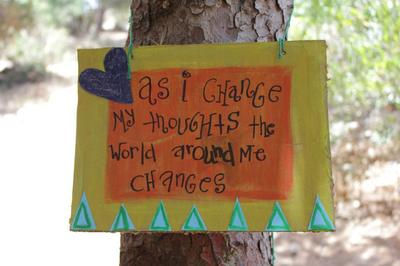
Art of 4 Elements – Change Your Thoughts
Divergent thinking is at the heart of creativity. It is the ability to see many possible interpretations of a question and to generate multiple potential answers. Rather than following a straight, predictable line of thought, divergent thinking explores many angles, perspectives, and possibilities.
It is often contrasted with convergent thinking, which follows a structured, logical path toward a single correct solution. Standardized testing heavily favors convergent thinking, even though creativity requires the opposite.
In Breakpoint and Beyond, George Land and Beth Jarman describe a longitudinal study of 1,600 children aged three to five. Using eight tests of divergent thinking, they found that 98% scored at the level of creative genius. Five years later, only 32% of the same children scored at that level. Five years after that, the number dropped to 10%. Among more than 200,000 adults tested, only 2% reached the creative genius category.
Divergent thinking tests measure the ability to generate many approaches to a problem. For example: What are the uses for a flowerpot?
Most people list 10–15 uses. A divergent-thinking genius might list a hundred—by altering assumptions, imagining new contexts, or transforming the object entirely.
So what happens to this universal creative capacity? What happened to those children?
Traditional schooling tends to reward fixed mental models and discourage experimentation. Mastering other people’s frameworks often suppresses the natural ability to think freely, explore, and imagine.
We are all born with creative potential, yet years of stress, fear of failure, and rigid expectations diminish it. The neocortex—the part of the brain responsible for complex thought—functions poorly under stress. A classroom must therefore be a safe space for experimentation, mistakes, revision, and risk-taking.
The brain also has two hemispheres. The left is associated with logic and analysis; the right with intuition and creativity. To develop both, children need opportunities for both convergent and divergent thinking.
Divergent thinking thrives in people who are curious, willing to take risks, and persistent. Research shows that musicians, for example, tend to use both hemispheres more fully and often excel in divergent thinking.
Activities That Promote Divergent Thinking
The world often tells us that peace is “out there” somewhere — in the next achievement, the next place, the next moment. But true spiritual consciousness reveals that everything we need is already within us.
Ernest Holmes reminds us, “In the Divine Plan, no mistakes are made.”
Raising consciousness is not about becoming something else. It is about uncovering what is already true.
- Learning to ask questions.
- Meditation and reflective thinking, giving students space to explore their own learning patterns.
- Connecting abstract concepts to real-life experiences, nature, and hands-on experimentation.
- Brainstorming, generating free-flowing associations that spark creativity.
- Collaborative work, which stimulates more ideas than competition.
- Creative dramatization, such as acting out scenes from books or history.
- Creative writing, allowing thoughts to flow freely on a subject.
- Engagement with the arts—music, acting, filmmaking, painting, dance, sculpture, photography.
- Sports and movement, which develop strategy, coordination, and teamwork.
- Rich, stimulating environments, with student-created materials and regularly changing displays.
Nurture Your Circle: Elevate Your Vibration with Metaphysics for Modern Living
Surround yourself with the dreamers and the doers,
the believers and the thinkers,
but most of all
surround yourself with those who see greatness within you,
even when you don’t see it yourself.